Israel’s human milk bank tripled activity after October 7, helping feed wartime babies, study finds

Israel’s human milk bank tripled activity after October 7, helping feed wartime babies, study finds

“The project’s success was caused by motivation; what caused success was motivation; giving of your own milk, giving part of yourself while nursing your own baby is the height of unconditional love.”
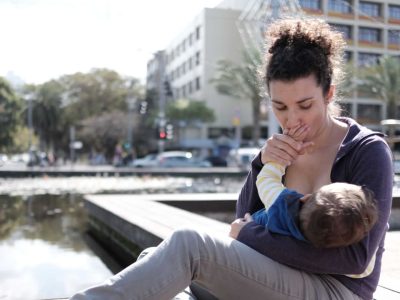
There are more than 800 mother’s milk banks around the world – about half in developed countries – that collect the nourishing liquid from breastfeeding mothers to give to premature babies whose mothers can’t nurse them.

None of those had the insight of pediatricians at the Israel National Council for Pediatrics and Child Health about the unique circumstances of breastfeeding women who were murdered, abducted to Gaza, traumatized, or wounded by Hamas terrorists – or recruited by the IDF to fight – on October 7, 2023.

The invasion of southern Israel by Hamas led to the massacre of more than 1,200 Israeli civilians – including women and children –the kidnapping of more than 250 hostages into the Gaza Strip, and threats to thousands of families. At the very onset of the Hamas massacre, the optimal continuation of breastfeeding was challenged by many cases of maternal death or disability, or by emergency deployment for active duty of lactating mothers playing critical roles in the army or the air force.

The nonprofit National Human Milk Bank of Magen David Adom is located in Ramle’s MDA Blood Bank. Its professionals were asked to supply breast milk from over 400 women donors to 46 healthy babies whose mothers were not with them.

Some 200 new donors join post-October 7
In addition to the veteran donors, around 200 new donors joined, according to Prof. Francis Mimouni, a veteran pediatrician at Jerusalem’s Shaare Zedek Medical Center and, for the last 15 years, chairman of the national council, who worked with Dr. Sharron Bransburg-Zabary, director of MDA’s human milk bank.

“Because of the war, we have tripled its activity, and in addition to providing the routine milk, there was an emergent need for safe mother’s milk to nourish babies who have been orphaned, whose mothers have been abducted or injured, or for babies whose mothers were recruited to the IDF, said Bransburg-Zabary, a certified lactation consultant who helped found, and who leads, the facility to provide safe, screened donor breast milk to premature, sick, and vulnerable infants.

“We worked around the clock and recruited many new donors to collect about a liter per day for each baby and to continue providing the infants and the premature babies with the safest milk that stands up to the highest supervision levels and passes all the tests and procedures needed for their health.”

Bransburg-Zabary explained that when infants or premature babies are fed exclusively with breast milk, a unique environment of microorganisms, such as beneficial bacteria, is created in their tissues. This environment is part of their immune protection and helps prevent allergies.

“If the biological mother is unable to nourish her infant with her own milk, supervised portions of breast milk from the Human Milk Bank are the recommended feeding option endorsed by health authorities worldwide and by the Health Ministry. Breast milk is defined as a ‘lifesaving treatment’ for infants in need.”

The journal Military Medicine quickly accepted and published the unique study titled “Human milk bank in a war zone: A report of the 2023-2025 war in the Middle East” by Mimouni, Bransburg-Zabary, Dr. Deena Rachel Zimmerman, Prof. Eilat Shinar (who runs the blood bank), and others.

Healthy babies needed donated breast milk
Mimouni told The Jerusalem Post in an interview that “we realized on Oct. 8 that there were babies who needed mother’s milk, even though these were not the usual ones that qualified. It was provided in normal times to premature, low-birth-weight babies to prevent infections like necrotizing enterocolitis.

“Our aim was not to save lives; the babies were all healthy, and at last resort, they could have been given infant formula. But it takes time for many infants to get used to formula after being nursed by their mothers. Some refused. They obviously had to drink from a baby bottle, which involves a very different technique of sucking with the tongue and mouth; but also having to get used to formula makes it harder.”

“Some families to whom we offered the donated milk asked how they could be sure it was sterile and suited to the baby,” Mimouni recalled. “We knew there would be anxieties, but weeks later, we did surveys of families who were involved in this unique experience. Many potential donors came forward after we published requests to apply.

“The project’s success was caused by motivation; what caused success was motivation; giving of your own milk, giving part of yourself while nursing your own baby is the height of unconditional love.”

In normal times, donors who had been given sterile bags brought their milk to a specific place, but with missiles falling and danger in the streets, MDA motorcycles took the bags every day and brought them to the Ramle milk bank.

MDA was chosen to run the milk bank in 2018 because “they’re used to dealing with emergencies,” explained Mimouni. There is no other place in the world where a national mother’s milk bank is run by a blood bank.”

When he was made chairman of the national council, he wanted to know what challenges there were and how to advise the ministry. “My idea was that there would be a mother’s milk bank.” He asked the then ministry director-general, Prof. Ronni Gamzu, to allocate NIS 1 million to start it, and he did. “So many people gave of their time.”

Asked if there was a very memorable case of a mother who needed milk donations for her baby, he recalled a woman Israel Air Force helicopter pilot who decided to halt her maternity leave to go on active duty and fly her Apache.

If another country asked him tomorrow how to prepare for war or a major disaster, his advice would be how to continue to collect contributions from lactating mothers and not to allow a mother’s milk bank to close down in an emergency.

“Some traumatized mothers who survived were unable to breastfeed because of stress, so they decided to give formula or to accept donations for their babies. We asked about the possibility of developing guilt feelings because they couldn’t feed them by themselves, but this wasn’t an issue,” said the council chairman.

“At enrollment, half of families expressed a high or moderate degree of anxiety. In contrast, after the infant received the donated milk, less than 25% still expressed anxiety. More than 80% attested that the donation helped them in handling the consequences of the war and contributed to their child’s health, while more than 90% felt that the donation contributed to their own well-being,” the authors wrote. “In settings of maternal loss or incapacity during war, donor human milk can be effectively provided by human milk.”

“They said they felt ‘the whole country supported me,’ so we saw the donor milk become a symbol of solidarity. So much good came out of it,” Mimouni added.

The donor milk undergoes many tests and has to meet very tough criteria for it to be given to other babies. The mothers are not self-selected. Those who apply have to list any medications they are taking, and the milk that is accepted is pasteurized. The area where the milk is handled at the bank is replete with yellow light to kill any bacteria or viruses in the air.

Asked whether the war since October 7 taught him something about medicine that he didn’t know before, Mimouni said that it clearly showed that medical workers don’t constantly think about their incomes. They came to work in hospitals and health funds, hotels where evacuees were sent. These included Israeli Arab doctors and nurses who asked if they were needed to help.”

The journal study isn’t really about the war, which was the circumstance. The published paper is about how an existing public health system adapts under extreme conditions.

In other words, the authors were asking: “What happens when a service designed for premature babies suddenly becomes part of national emergency response?”

The National Human Milk Bank in Ramle can be contacted by email at [email protected]; by WhatsApp at 052-634-4101; and by phone at 073-263-0200.

MDA Teams Assist in Evacuating Nursing Home Patients in the Shoresh Area and the Jerusalem Corridor Due to Fire

Magen David Adom (MDA) plays a critical role during wildfires in Israel, acting as the nation’s emergency medical service and first responder.
Their responsibilities include:

  • Evacuation and Emergency Care: MDA teams work tirelessly to evacuate individuals from affected areas, providing immediate medical care to those injured or suffering from smoke inhalation.
  • Coordination with Firefighters: They collaborate closely with firefighting units to ensure the safety of both civilians and emergency personnel.
  • Rapid Response Vehicles: MDA deploys specialized vehicles, including ambulances and mobile intensive care units, to reach remote or hazardous locations swiftly. This fleet now includes an intensive care bus, designed based on lessons from emergencies, capable of treating multiple patients simultaneously with advanced medical equipment and a sophisticated oxygen system.
  • Blood Supply Management: They oversee the collection and distribution of blood units to hospitals and the Israel Defence Forces, ensuring readiness for emergencies.
  • Volunteer Mobilization: MDA’s extensive network of volunteers is activated to assist in rescue operations and provide support to affected communities. Their dedication and efficiency make them a cornerstone of Israel’s disaster response efforts. It’s truly inspiring to see their commitment to saving lives under challenging circumstances.

Press Release

MDA Teams Assist in Evacuating Nursing Home Patients in the Shoresh Area and the Jerusalem Corridor Due to Fire

Magen David Adom teams are currently assisting in the evacuation of nursing home patients in the Shoresh area in the Jerusalem Hills, following a fire in the region. Over 20 ambulances have been mobilized for the operation, including mobile intensive care units, as well as MDA’s intensive care bus, which is designed for the mass evacuation of patients in complex conditions.

The evacuation is being carried out to alternative nursing homes in Jerusalem, in accordance with the Ministry of Health’s guidelines, while ensuring the safety of the patients and the continuity of their medical care.

MDA remains on high alert, ready to respond to any emergency and provide the necessary medical care.

Zaki Heller
MDA Spokesperson

MDA Emergency Medical Service Responds to Save Lives following a Terrorist Attack ( Sunday 27/10/2024)

Press Release

33 injured, including 6 in serious condition, 7 moderate, and 20 mild, after being struck by truck in Ramat Hasharon

At 10:08 today (Sunday), a report was received in MDA’s 101 Emergency Call Center of a truck that struck dozens of people near a bus stop in Aharon Yariv Blvd, in Ramat Hasharon.

Large numbers of MDA teams were dispatched to the scene, including ambulances, mobile intensive care units (MICUs) and Medicycle responders who were rapidly on scene, provided medical treatment and evacuated 37 casualties to Ichilov, Beilinson, Hasharon, Wolfson, Shamir-Assaf Harofe, Sheba in Tel Hashomer, Laniado and Meir Hospitals. Among the injured:

– 6 in serious condition

– 7 in moderate condition

– 20 in mild condition

– 4 anxiety victims

The casualties were divided to the following hospitals:

Ichilov Hospital – 5 casualties (3 serious, 70 year old male in head and limb injuries, sedated and ventilated, 72 year old male with multi-trauma injuries, and an 80 year old male with limb injuries; 1 moderate, 60 year old female with multi-trauma injuries, 1 mild) and 2 with anxiety symptoms

Meir Hospital – 9 casualties (3 serious, 40 year old male with a head injury, a 70 year old male with multi-trauma injuries, 72 year female with face and limb injuries. 3 moderate, 60 year old male with limb injuries, 65 year old male and female with upper body injuries, and 3 mild with limb injuries)

Meir Hospital – 4 casualties (2 moderate, 82 year old female with a pelvic injury, and a 60 year old male with limb injuries, and 2 mild)

Laniado Hospital – 6 casualties (1 moderate and 5 mild, males and females in their 70s with limb injuries)

Wolfson Hospital – 3 mild (male and female aged about 75 with limb injuries and 30 year old male with limb injuries)

Shamir-Assaf Harofe Hospital – 2 mild (male and female in their 60s with limb injuries)

Sheba Tel Hashomer Hospital – 3 mild (65 year old female, 60 and 29 year old males with limb injuries) and 2 with anxiety symptoms

Hasharon Hospital – 1 mild (73 year old male with head and limb injuries)


During the incident, Magen David Adom’s Blood Services supplied 90 units of blood and blood components to Beilinson, Ichilov and Meir Hospitals

MDA Senior EMT Elior Yosef: “When we arrived on scene we saw a truck that had struck dozens of people who had alighted from a bus and were standing at the bus stop. 8 casualties were trapped under the truck, and a number of further casualties were either lying or walking near the truck. We performed a primary survey to assess the injuries, immediately began treating the casualties, and then evacuated them to hospital.

MDA Senior EMT Raziel Yosepovich: “I was rapidly on scene with an MDA Medicycle. I saw a number of people trapped under the truck. Along with additional MDA teams, I started treating the casualties, and assisted the ambulance and MICU teams who evacuated the casualties to hospital.

MDA Medicycle Unit Paramedic Yissachar Weiss: “This was an extremely difficult scene where a truck had hit dozens of people at a bus stop in Ramat Hasharon. The casualties with varying levels of injury were all conscious, with 8 trapped under the truck. We immediately began treating the casualties, including stopping any bleeding while extrication efforts continued. We managed to extricate 7 with the help of members of the public, and one with the assistance of the fire department. MDA’s teams who were on scene with ambulances and MICUs, rapidly evacuated the casualties to hospital, while continuing to provide treatment en-route.”

Zaki Heller
MDA Spokesperson

Press Release: Two police officers who recovered from their severe injuries met the paramedics who saved their lives

Press Release

Two police officers who recovered from their severe injuries visited the MDA helipad and met the paramedics who saved their lives on the Black Saturday: “This is very emotional; I never stopped thinking about you”

During the battles that occurred on the Black Saturday, two officers from the Segev Shalom police station were seriously injured, Operations Officer Or Yosef and Intelligence Officer Yoni Daskalo. This week, Chief Inspectors Or Yosef and Yoni Daskalo visited MDA’s helipad in the South, where they met, for the first time since the event, the paramedics who saved their lives.

“The first siren began as I was finishing a night shift. Because of the irregular number of sirens I understood the whole event was irregular,” Chief Officer Yoni Daskalo recalls. “Reports started to arrive on what was occurring over in Sderot and Ofakim so I began to head in that direction. Minutes later I met Or, and we had our first encounter with terrorists – a gunfight. On route to Ofakim, we had another. After the gunfire stopped, we evacuated more and more casualties from that area, but when we entered Re’im to proceed with the evacuation, we heard a violent explosion we recognized as an RPG. We knew that if we will stay in the vehicle we would die so we decided to get out, take cover and fight the terrorists from there. During the battle we were hurt by gunfire and shrapnel, I received a bullet to the stomach and Or suffered injuries to his limbs.

Chief Inspector Yosef Or: “We evacuated ourselves towards Ofakim, where we stopped and waved our hands at an MDA MICU which passed by us and stopped near us, Nisim the paramedic ran out towards us, immediately providing us with treatment and placing us in the MICU.”

MDA Paramedic Nisim Sasi spoke about the moment in which he met Or and Yoni: “As we began treating you, we put you in the MICU and at the same time reported your condition to MDA’s Dispatch Center. I knew your condition did not allow us to evacuate you in an ambulance to Soroka Hospital so I requested a helicopter to meet us at Beit Kama Junction. Those were some dramatic moments; we fought for your lives through the whole journey. During the evacuation Yoni said to me that he is going to die, I held his hand and answered him ‘you’re not going to die here, not on my shift.’ Seeing you here today, back on your feet, illustrates how important our fight for your lives was on the MICU. I was worried about you and I am excited to see you again.”

“We landed with the helicopter around Beit Kama and right after we joined the MICU. We rapidly put you in since we realized every second mattered and we needed to fly you to the hospital as fast as possible,” said MDA flight paramedic and head of the paramedic school, Dr. Shafir Botner, “Those were critical moments in the battle for your lives.”

MDA flight paramedic and medical division director, Rami Miller concluded: “We fight a battle for each patient. Every thought on who will survive and who will not – we leave out of our considerations. This is a real battle for the life of every patient, and today, two and a half months after the black Saturday, in which we battled for Yoni and Or’s lives, this is very exciting being with them here, brave police officers, who were badly wounded, standing here smiling. This is very emotional; I never stopped thinking about you.”