Meet the couple who save lives on their date nights: ‘This is our quality time’

Meet the couple who save lives on their date nights: ‘This is our quality time’

Hodaya and Avi Feivelson drop their kids off at school and then respond to emergency calls together, turning their Magen David Adom volunteer shifts into meaningful time as a couple while helping patients, accident victims and women in labor.

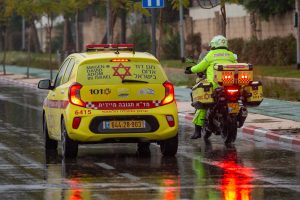
For most couples, date night means dinner, a movie or a quiet evening together. For Hodaya and Avi Feivelson, it often means responding to emergency calls in a Magen David Adom rapid response vehicle and helping people in need.

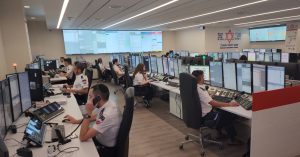
“After we drop our children off at their educational programs, we volunteer as a couple in a rapid response vehicle and go together to emergency calls to provide medical care to patients. This is our quality time, just like dates,” said the couple of Magen David Adom paramedic volunteers from Kiryat Ata.

Their unusual last name often catches people’s attention when they arrive together at emergency scenes to treat injured people, patients and women in labor.

“Patients often notice that we are a married couple. Once, a woman who was about to give birth and whom we arrived to assist during delivery called afterward to thank us and said it was amazing that we volunteer together,” Hodaya said.
The couple’s journey with Magen David Adom began about three years ago, when Avi completed an emergency medical responder course and started volunteering. Hodaya, who had recently given birth at the time, waited until she recovered and then enrolled in the same course.
“My dream until today is to become a doctor. I always knew I wanted to work in medical care,” Hodaya said. “I know I will get there one day, but there is no doubt that, for me, Magen David Adom is also the fulfillment of a dream.”

Today, nearly nine years into their marriage, Hodaya and Avi each work independently, manage the household and raise their five children. They still make time to respond to emergency calls together and separately.
“We have a rapid response vehicle in our parking area so we can always be ready to leave at any hour and at any time for a patient who needs us,” Avi said.
He added that their children have also become connected to Magen David Adom’s work.
“Our children also live Magen David Adom,” he said. “We noticed that they play among themselves as if they are paramedics. They have walkie-talkies that they pretend are the MDA 101 emergency dispatch center that sends us out to calls, and even last Purim they all dressed up as paramedics.”

How Drone, Missile Threats are Changing Emergency Medical Services

By Raphael Herbst

Ongoing security threats across the Middle East, Eastern Europe and the Persian Gulf are forcing emergency medical systems into prolonged periods of high-intensity emergency response. Missile and drone attacks are placing sustained pressure on dispatch centers, frontline responders, hospitals and volunteer networks.

The experience in Israel provides real-world examples for other nations of how to manage mass-casualty threats from the latest dangers.

In Israel, which has experienced hundreds of ballistic missile attacks between late February and April, and again this summer, the national emergency medical service – Magen David Adom (MDA) – has treated more than 2,400 injuries from missile impacts, shrapnel hits, falls from civilians running to shelters and other incidents across dozens of cities.

One of the biggest operational shifts has come with the need to respond to missiles carrying cluster munitions, which disperse dozens of explosives across a radius up to three miles creating numerous scenes at once.

In addition, some cluster bomb missiles release corrosive fumes that can cause internal respiratory burns, requiring hazmat clearance before medics could provide care. Others have been equipped with delayed fuses that specifically target first responders, exploding minutes or hours after the initial strike.

Working under these conditions has required extreme caution and constant adjustment.

Preparedness is crucial

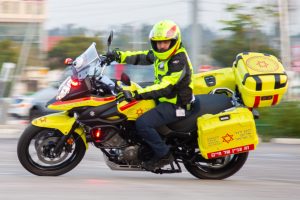
During the recent conflicts with Iran, MDA operated at full readiness from the outset. MDA officials staffed mobile intensive care units, medi-cycles and other rapid response vehicles and positioned them across the country, allowing teams to be dispatched immediately in response to Iranian attacks.

This level of readiness was the result of targeted preparation in the years prior, particularly following earlier rounds of conflict that exposed gaps in large-scale response. We expanded our focus on training for mass-casualty scenarios that reflect real world conditions.

Paramedics and EMTs began working extensively with simulation-tools, including virtual reality scenarios that replicate the sensory and cognitive demands of mass-casualty events. Teams worked through simulations that included noise, confusion, incomplete information and competing priorities.

The goal was to build familiarity with those conditions before facing them in the field, so that when multiple scenes emerged at once, crews could triage, make decisions and coordinate even before the complete picture became available.

The same approach can strengthen emergency systems anywhere — train for complexity. The lessons include: investing in realistic simulations; building a dispatch system with the capacity to handle more than one scene at a time; training teams to operate with incomplete information; and, positioning resources in a way that allows for rapid, distributed response.

Expanding response capacity

Large-scale emergency response depends on having a scalable responder network already in place. At MDA, our emergency medical services (EMS) were built around that model from the outset.

What makes MDA’s model particularly effective is that our responders, who are mostly trained volunteers, including doctors, operate within the same communities where they live and work. This can ensure a local response within minutes.

We rely on the volunteers to know the streets, the buildings and the people. They can use that familiarity to navigate quickly and begin providing care immediately. In addition, our organization relies not just on ambulances, but medics also travel by bike, motorcycle or even by foot in dense communities. These alternate modes of transportation make it possible to reach areas where roads may be closed or blocked.

EMS systems looking to expand their response capacity should invest in building and maintaining integrated community-based responder networks, make sure they have agile and flexible modes of transportation to reach scenes and are fully integrated into the system before a crisis happens.

Supporting first responders

Sustained emergency response places a different kind of strain on EMS teams—requiring them to move constantly between high-intensity scenes and routine operations, often over extended shifts and with little time to reset.

To address this, MDA has developed structured systems to support responders before, during and after major incidents. These include immediate access to mental health professionals following difficult calls, as well as formal debrief processes that allow teams to process events in a structured setting.

The goal is not to eliminate stress—that is not possible in emergency medicine—but to ensure that responders can continue to function effectively over time. Resilience has to be built into the system, not left to individuals.

The conditions Israel has faced are extreme, but the principles that have guided our response are not and are applicable elsewhere. Preparedness determines outcomes. Community-based responders extend our reach. Structured support allows our teams to continue operating under sustained pressure.

As more countries deal with and prepare to meet new threats, EMS organizations need to plan how they will adjust operations in order to respond if conflict reaches their doorstep.

Raphael Herbst is deputy director of Magen David Adom’s international relations department  and is based at MDA Headquarters in Ramla, Israel.

Magen David Adom summarizes 2025 in numbers

Press Release

MDA emergency vehicles were dispatched 1,383,026 times – on average, a team was dispatched every 22.8 seconds // Increase in the number of road traffic casualties and a decrease in blood donations

Magen David Adom summarizes 2025 in numbers

Over the past year, Magen David Adom has been engaged in life-saving activities in routine and emergency situations. On the eve of the civil New Year, the organization summarizes the past year and presents the main areas of activity in numbers.

In 2025, MDA marked 95 years of activity. According to the organization’s data, over the past year MDA paramedics and EMTs were dispatched 1,383,026 times to incidents using thousands of mobile intensive care units, ambulances, emergency motorcycles, and rapid response vehicles throughout the country. On average, a call is received at MDA’s 101 emergency dispatch center every 7.3 seconds, and the average response time is up to just 2 seconds.


Eli Bin, Director General of MDA: “Throughout 2025, Magen David Adom continued to advance technologically and strengthen its capabilities with the support of generous donors from Israel and around the world, while providing some of the best emergency medical services in the world and collecting blood units for hospitals and the IDF in routine times and during the war. Approximately 39,200 volunteers and employees of the organization worked over the past year for the health of the residents of the State of Israel, day and night, in the air, at sea and on land, on Shabbat and holidays, in summer and winter, with dedication and great compassion, professionalism and, above all, from the heart. Over the past year as well, we were forced to cope with the bereavement that claimed the lives of some of our finest volunteers and employees who fell in battle while defending the country in the north and south during their military service. Magen David Adom teams continued to work under fire and while risking their lives, with bravery and courage, in order to save lives in the best possible manner. In 2026 as well, we will continue to do everything in our power and will spare no effort for the health of the citizens of the State of Israel.”

Yearly Summary in Numbers:
MDA has approximately 39,200 volunteers, employees, national service and civil service volunteers, including about 16,500 youth volunteers. In addition, approximately 18,000 “Life Guardians” are active with MDA. MDA volunteers invested more than 6.3 million volunteer hours. The average age of MDA volunteers is 26.8. The oldest volunteer is a 92-year-old resident of Ness Ziona, and the youngest MDA volunteer is 14 years old.

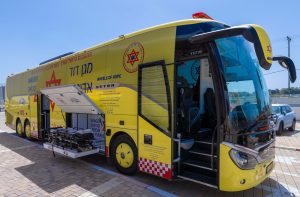
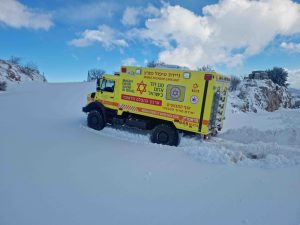
Magen David Adom operates 211 stations and dispatch points throughout the country. Thousands of mobile intensive care units, ambulances, MDA medicycles and unique vehicles operate nationwide. These include 296 rapid response vehicles, of which 70 are electric; 78 of MDA’s ambulances and mobile intensive care units have four-wheel drive (4X4); 17 ATVs; 25 mass-casualty incident vehicles; and 40 trailers equipped for mass-casualty incident treatment; 19 medical supervisor vehicles; 3 Unimog vehicles; and 5 mobile intensive care buses. 

There are 10 ambulances equipped with lifts for people with disabilities, 8 ambulances with special stretchers for bariatric patients, and 3 mobile intensive care units capable of treating two complex patients simultaneously. Eighty-two of the ambulances, mobile intensive care units and command vehicles are bulletproof. MDA also operates 3 electric MiaFour vehicles, 2 electric vehicles for sports fields, 3 mobile towed dispatch points, and a mobile clinic caravan.

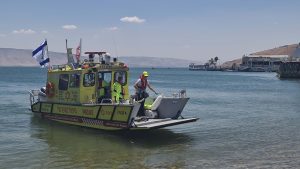
There are 653 motorcycles, including 97 heavy motorcycles, and 150 electric bicycles. On the Sea of Galilee, MDA operates a sea-ambulance intensive care vessel, and on the beaches of Eilat an MDA sea-ambulance boat operates; together they were dispatched to provide medical treatment in 154 incidents. MDA’s unique ECMO unit, operating in cooperation with Shamir–Assaf Harofeh Medical Center, provided medical treatment to 25 patients, of whom 9 were connected to a heart-lung machine as part of resuscitation efforts in the field.

In 2025, MDA emergency vehicles were dispatched 1,383,026 times. On average, a team was dispatched every 22.8 seconds. In road traffic accidents throughout the country, MDA EMTs and paramedics provided medical treatment to 71,736 casualties, an increase of 6% compared to 2024. During the bathing season, MDA EMTs and paramedics provided medical treatment to 287 adults and children who were rescued from the sea, swimming pools, and various water sources after drowning incidents.

Approximately 500,000 men and women completed resuscitation and first aid courses in more than 16,500 courses nationwide over the past year. About 15,000 of them were trained as part of free first aid and emergency building-teams’ courses conducted by MDA in shelters and protected spaces as part of public service during the “Iron Swords” war and Operation “Rising Lion – Am K’Lavi.” MDA’s Medical Division inaugurated this year one of the most advanced training centers in the world and certified 497 new paramedics, 105 of whom are national service participants. In addition, 780 youth volunteers were trained in mass-casualty incident response, and 732 youths were certified as first aid instructors.

As part of the lessons learned from October 7, 2023, MDA’s Operations Division initiated the Magen Project, aimed at preparing the civilian home front for emergencies. Since the start of the project, 16,588 civilians, including members of emergency security response teams, municipal employees, inspectors and others have been trained to provide initial medical care, with 1,976 trained this year alone. All project participants, including more than 1,000 physicians and paramedics, were equipped by MDA with medical equipment and will be able to provide initial response if necessary, even in incidents involving communities cut off from access routes due to natural disasters, war, terrorist infiltration, and more.

A total of 15,446 pregnant women were evacuated to hospitals; 1,014 of them gave birth with the assistance of MDA teams at home or on the way to the hospital. MDA operates the on-call midwives project, under which professional midwives are equipped by MDA with advanced and unique medical equipment and dispatched in parallel with a mobile intensive care unit to assist women in advanced labor. This year, 214 midwives from across the country joined the project, helping provide medical care alongside MDA teams in dozens of obstetric emergencies and assisting in the delivery of 7 babies.

This year, 263,945 blood units were collected by MDA Blood Services teams in 8,859 blood drives held in public locations nationwide, in donation rooms at MDA stations, in schools, workplaces, and IDF bases. Of the blood donors in 2025, 34% were women and 66% were men. Among the hundreds of thousands who donated blood this year, 44,168 were new donors who donated blood for the first time. Of all blood units supplied by MDA Blood Services to the security forces and hospitals, 10,563 were units of whole blood. During Operation “Rising Lion,” MDA Blood Services conducted 157 blood drives and collected 16,008 blood units that were supplied to hospitals and the IDF, saving the lives of civilians, police officers and soldiers. A total of 476 units of whole blood were supplied to hospitals and the IDF. Forty percent of the blood donors during the operation were women, and 3,076 of the blood donors between 13–24.6.25 were first-time donors.

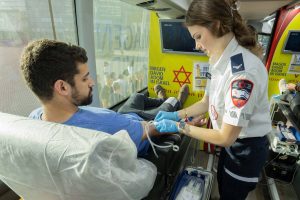
MDA Blood Services operate 34 blood team vehicles and 16 blood donation vehicles, including 2 blood donation buses, each capable of collecting donations from 5 donors simultaneously. All blood donations were tested for blood type determination and infectious disease identification in MDA Blood Services laboratories located in the fortified building at the MDA Campus in Ramla, the first of its kind in the world, and supplied to all hospitals and the IDF.

MDA’s National Human Milk Bank supplied approximately 4,200 liters of breast milk over the past civil year to premature infants in neonatal intensive care units, newborns in hospitals, and sick infants at home who require breast milk due to their medical condition. For “war babies” from Operation “Rising Lion” and in special cases, approximately 40 liters of breast milk were supplied to orphans whose mothers had begun breastfeeding or wished to breastfeed and passed away after childbirth. This represents an increase of approximately 20% compared to 2024. Over the past year, approximately 500 new milk donors joined the bank, all meeting the strictest medical standards to provide the safest possible milk for premature infants.

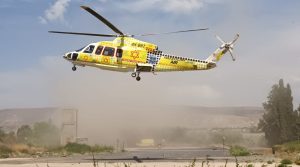
MDA’s logistics division ensured all the organization’s medical and operational needs in the field throughout the year. In 2025, 3,008 immediate response kits were prepared by division staff and volunteers and distributed to EMTs, paramedics and physicians, enabling them to save lives even outside of work and volunteer hours. One hundred wishes were fulfilled thanks to MDA’s Wish Ambulance. In cooperation with Hatzolah-Air and Brook Aviation, MDA operates 5 helicopters equipped with advanced intensive care equipment, which treated and air-evacuated 324 patients and casualties to hospitals across the country.

MDA operates a unique national command-and-control truck equipped with state-of-the-art technologies, as well as 3 regional command and communications vehicles. This year, MDA teams participated in 425 drills, during which 723 ambulances, 306 mobile intensive care units, medicycles, mass-casualty vehicles, ATVs, Unimogs, command posts, medical supervisor vehicles, rapid response vehicles, mobile intensive care buses, MDA helicopters and additional equipment were deployed. Over the past year, 4,288,169 calls were received at MDA’s 101 dispatch center. On average, a 101 call is received every 7.3 seconds, while the average response time is up to just 2 seconds. In 2025, MDA installed 81 public-access defibrillators in 39 communities nationwide. Since the launch of the public defibrillator placement project, MDA has installed 1,908 life-saving devices in hundreds of communities. In addition, MDA has installed more than 600 devices in synagogues in Jerusalem and other cities.

Zaki Heller
MDA spokesperson

MDA Life Saving & the Israel/Iran War

Press Release

Since the start of Operation “Rising Lion”: Magen David Adom teams have treated 204 victims, including 3 fatalities, 2 in serious condition, 7 moderate, 159 mild, and 33 suffering from anxiety

With the launch of Operation “Rising Lion” and the declaration of a special state of emergency on the home front early Friday morning (June 13), Magen David Adom raised its alert level to the maximum. All MDA ambulances, mobile intensive care units, emergency medicycles, and rapid response vehicles were fully staffed, and the organization’s 35,000 staff and volunteers were mobilized to provide fast and effective medical care wherever needed.

Magen David Adom teams were dispatched to multiple scenes, arriving with significant forces including ambulances, mobile intensive care units, medicycle first responders. They treated a total of 204 people: 3 fatalities, 2 seriously injured, 7 moderately injured, 159 lightly injured, and 33 experiencing anxiety.

Key locations where victims were treated and evacuated to hospitals:

From the rocket strike site in the Tel Aviv area, 13 patients were evacuated: 2 in moderate condition and 11 in mild condition.

From the rocket site in the Ramat Gan area, 30 casualties were evacuated: A 74-year-old woman was evacuated in critical condition and pronounced dead at the hospital, a 65-year-old man in serious condition, 1 in moderate condition, and 27 in mild condition.

From the rocket strike site in the Rishon LeZion area, 29 casualties were evacuated: A 60-year-old woman was rescued with no signs of life and pronounced dead at the scene, a 73-year-old man was evacuated in critical condition and later died at the hospital, 2 in moderate condition, and 25 in mild condition.

Additionally, MDA teams treated at the other sites 5 casualties from debris and shrapnel (1 moderate, 4 mild), and 94 people injured on route to shelters including serious, 1 moderate, and 92 mild, as well as 33 patients suffering from anxiety.

Magen David Adom teams are operating at the request of the Ministry of Health to evacuate nursing patients, ventilated patients, premature babies, and others from their current locations to protected facilities using MDA’s special intensive care buses, mobile intensive care units, and ambulances.

MDA’s EMTs and paramedics remain on high alert, ready to provide immediate medical care as needed.

Zaki Heller
MDA Spokesperson

MDA Teams Assist in Evacuating Nursing Home Patients in the Shoresh Area and the Jerusalem Corridor Due to Fire

Magen David Adom (MDA) plays a critical role during wildfires in Israel, acting as the nation’s emergency medical service and first responder.
Their responsibilities include:

  • Evacuation and Emergency Care: MDA teams work tirelessly to evacuate individuals from affected areas, providing immediate medical care to those injured or suffering from smoke inhalation.
  • Coordination with Firefighters: They collaborate closely with firefighting units to ensure the safety of both civilians and emergency personnel.
  • Rapid Response Vehicles: MDA deploys specialized vehicles, including ambulances and mobile intensive care units, to reach remote or hazardous locations swiftly. This fleet now includes an intensive care bus, designed based on lessons from emergencies, capable of treating multiple patients simultaneously with advanced medical equipment and a sophisticated oxygen system.
  • Blood Supply Management: They oversee the collection and distribution of blood units to hospitals and the Israel Defence Forces, ensuring readiness for emergencies.
  • Volunteer Mobilization: MDA’s extensive network of volunteers is activated to assist in rescue operations and provide support to affected communities. Their dedication and efficiency make them a cornerstone of Israel’s disaster response efforts. It’s truly inspiring to see their commitment to saving lives under challenging circumstances.

Press Release

MDA Teams Assist in Evacuating Nursing Home Patients in the Shoresh Area and the Jerusalem Corridor Due to Fire

Magen David Adom teams are currently assisting in the evacuation of nursing home patients in the Shoresh area in the Jerusalem Hills, following a fire in the region. Over 20 ambulances have been mobilized for the operation, including mobile intensive care units, as well as MDA’s intensive care bus, which is designed for the mass evacuation of patients in complex conditions.

The evacuation is being carried out to alternative nursing homes in Jerusalem, in accordance with the Ministry of Health’s guidelines, while ensuring the safety of the patients and the continuity of their medical care.

MDA remains on high alert, ready to respond to any emergency and provide the necessary medical care.

Zaki Heller
MDA Spokesperson

MDA Emergency Medical Service Responds to Save Lives following a Terrorist Attack ( Sunday 27/10/2024)

Press Release

33 injured, including 6 in serious condition, 7 moderate, and 20 mild, after being struck by truck in Ramat Hasharon

At 10:08 today (Sunday), a report was received in MDA’s 101 Emergency Call Center of a truck that struck dozens of people near a bus stop in Aharon Yariv Blvd, in Ramat Hasharon.

Large numbers of MDA teams were dispatched to the scene, including ambulances, mobile intensive care units (MICUs) and Medicycle responders who were rapidly on scene, provided medical treatment and evacuated 37 casualties to Ichilov, Beilinson, Hasharon, Wolfson, Shamir-Assaf Harofe, Sheba in Tel Hashomer, Laniado and Meir Hospitals. Among the injured:

– 6 in serious condition

– 7 in moderate condition

– 20 in mild condition

– 4 anxiety victims

The casualties were divided to the following hospitals:

Ichilov Hospital – 5 casualties (3 serious, 70 year old male in head and limb injuries, sedated and ventilated, 72 year old male with multi-trauma injuries, and an 80 year old male with limb injuries; 1 moderate, 60 year old female with multi-trauma injuries, 1 mild) and 2 with anxiety symptoms

Meir Hospital – 9 casualties (3 serious, 40 year old male with a head injury, a 70 year old male with multi-trauma injuries, 72 year female with face and limb injuries. 3 moderate, 60 year old male with limb injuries, 65 year old male and female with upper body injuries, and 3 mild with limb injuries)

Meir Hospital – 4 casualties (2 moderate, 82 year old female with a pelvic injury, and a 60 year old male with limb injuries, and 2 mild)

Laniado Hospital – 6 casualties (1 moderate and 5 mild, males and females in their 70s with limb injuries)

Wolfson Hospital – 3 mild (male and female aged about 75 with limb injuries and 30 year old male with limb injuries)

Shamir-Assaf Harofe Hospital – 2 mild (male and female in their 60s with limb injuries)

Sheba Tel Hashomer Hospital – 3 mild (65 year old female, 60 and 29 year old males with limb injuries) and 2 with anxiety symptoms

Hasharon Hospital – 1 mild (73 year old male with head and limb injuries)


During the incident, Magen David Adom’s Blood Services supplied 90 units of blood and blood components to Beilinson, Ichilov and Meir Hospitals

MDA Senior EMT Elior Yosef: “When we arrived on scene we saw a truck that had struck dozens of people who had alighted from a bus and were standing at the bus stop. 8 casualties were trapped under the truck, and a number of further casualties were either lying or walking near the truck. We performed a primary survey to assess the injuries, immediately began treating the casualties, and then evacuated them to hospital.

MDA Senior EMT Raziel Yosepovich: “I was rapidly on scene with an MDA Medicycle. I saw a number of people trapped under the truck. Along with additional MDA teams, I started treating the casualties, and assisted the ambulance and MICU teams who evacuated the casualties to hospital.

MDA Medicycle Unit Paramedic Yissachar Weiss: “This was an extremely difficult scene where a truck had hit dozens of people at a bus stop in Ramat Hasharon. The casualties with varying levels of injury were all conscious, with 8 trapped under the truck. We immediately began treating the casualties, including stopping any bleeding while extrication efforts continued. We managed to extricate 7 with the help of members of the public, and one with the assistance of the fire department. MDA’s teams who were on scene with ambulances and MICUs, rapidly evacuated the casualties to hospital, while continuing to provide treatment en-route.”

Zaki Heller
MDA Spokesperson

Magen David Adom a typical day

Press Release – October 19, 2024

1 Fatality and 14 Casualties from Hezbollah Rocket Fire from Lebanon to Northern Israel

Following the massive rocket fire from Hezbollah from Lebanon toward northern Israel this morning, Magen David Adom EMTs and Paramedics pronounced the death of a 51-year-old man and provided medical treatment to 14 casualties resulting from several strikes in different areas of northern Israel, including Akko, Kiryat, and the Western Galilee. All casualties were evacuated by MDA teams to Rambam Hospital, the Galilee Medical Center, and Nahariya Hospital. Among the casualties: 2 in moderate condition, 8 in mild condition, and 4 suffering from anxiety.

Around 10:30 AM this morning (Saturday), a direct hit in Kiryat Ata led to the injury of 9 people due to shrapnel, blast injuries, and anxiety. The casualties, including 3 from shrapnel injuries (a 28-year-old man in moderate condition and a man and woman around 40 in mild condition), 2 individuals with mild blast injuries, and 4 suffering from anxiety, received medical treatment from Magen David Adom teams and were evacuated to Rambam Hospital.

MDA Senior EMT Ofek Zabarov, one of the first responders at the scene in Kiryat Ata, said:
“We were very close to the location and got out of the ambulance to take cover. Suddenly, we heard a loud explosion, and shrapnel flew in our direction and hit the ambulance. We got back into the ambulance and immediately headed to a nearby street where the strike occurred. We saw destruction in one of the buildings and a crowd of people coming out. Casualties started arriving from the apartment that was hit and from other apartments in the building. We treated a 28-year-old man, fully conscious, with shrapnel injuries to his ear, neck, and limbs. We provided him with initial treatment, and shortly after, a man and woman around 40 arrived with shrapnel injuries to their limbs. They were also fully conscious and in mild condition. In addition, a young man and woman in their 20s were injured by the blast, suffering from injuries to their back, limbs, and hearing. We treated the 5 casualties and evacuated them to hospital in mild condition. Additionally, 4 individuals suffering from anxiety were evacuated from the scene. It was a complex incident, during which we scanned the apartments to ensure there were no additional casualties.”

At the same time in the Western Galilee, Magen David Adom teams treated and evacuated 4 casualties with shrapnel injuries after a strike near a vehicle on an open road. Among the casualties was a 30-year-old man in moderate condition and 3 others in mild condition. All were evacuated to the Galilee Medical Center in Nahariya.

MDA Senior EMT Avinoam Crispin said:
“We arrived at the scene and saw several casualties with shrapnel injuries who had exited their vehicle. They were injured by a strike on the open road near the vehicle. We treated 4 casualties, one of whom was in moderate condition with shrapnel injuries to his limbs and ear, while the others suffered mild shrapnel injuries. We provided initial medical treatment and evacuated them to the Galilee Medical Center in Nahariya.”

Around 1:00 PM, a 50-year-old man was killed near Akko after being struck by shrapnel from a direct hit near his vehicle. Another casualty, in mild condition, was evacuated from the scene after receiving initial treatment from Magen David Adom teams and transported to the Galilee Medical Center.

MDA Paramedic Orit Ohana, one of the first responders at the scene, said:
“We arrived quickly at the scene and saw a vehicle that had been hit by a direct strike nearby. Inside the vehicle was a 50-year-old man who had pulled over to the side of the road and was hit by shrapnel. Unfortunately, his injuries were severe, and we had no choice but to pronounce him dead. Additionally, another casualty, in moderate condition, was evacuated from the scene after exiting the vehicle when the siren was heard.”

MDA Senior EMT Alex Mutzkin said:
“We arrived at the scene and saw a vehicle on the side of the road hit by heavy shrapnel, with shattered windows and damage to nearby shops. Inside the car was a 50-year-old driver, and next to him sat a man in his 40s. He told us that when the siren sounded, they pulled over to the side of the road, and suddenly, they heard an explosion before they had a chance to exit the car. The driver did not manage to duck, while the passenger beside him crouched down and put his head between his knees. Due to the shrapnel, the driver sustained fatal injuries, and after resuscitation efforts, we had to pronounce him dead. The passenger beside him exited the vehicle fully conscious, suffering from a shrapnel scratch near his ear. We provided medical treatment and evacuated him to the hospital in mild and stable condition. This incident demonstrated the importance of following the Home Front Command’s instructions; in this case, the passenger’s crouching down saved his life.”

Magen David Adom teams are on high alert and continue to provide medical assistance wherever needed. MDA teams are deployed throughout the country, ready to respond quickly and efficiently to any emergency, with the goal of saving lives and providing swift, professional care to the injured.

MDA Director General Eli Bin: “MDA teams are deployed throughout the country and ready to respond quickly to any incident. We urge the public to follow the Home Front Command’s instructions, remain close to sheltered areas, and avoid gatherings in dangerous zones. We will continue to operate with dedication and professionalism for the health and safety of the public.”

Zaki Heller
MDA Spokesperson

Senior EMT at Magen David Adom, Adam Sfadi arrived at the scene in Majdal Shams and found his daughter showing no signs of life.

After the missile fell on the soccer field in Majdal Shams, a senior EMT at Magen David Adom, Adam Sfadi arrived at the scene and found his daughter showing no signs of life. Despite this, he continued to treat the wounded and managed to save lives.

Adam Sfadi, 50 years old, lives with his family in Majdal Shams, has been working as a senior medic at the local MDA Mas’adeh station in for 17 years. On Saturday afternoon, July 27, 2024, on his way home from a wedding that took place in the area, he met Vinis (12), his youngest daughter and her friend dressed in soccer uniforms. She told him that she was going to play with friends at the local municipality’s soccer field. A few hours later, alarms started to sound in the northern area. While Adam was sharing his concerns about Vinis with his wife, an alarm was sounded in their area, and a few seconds later, a strong explosion. Without hesitation he decides to go out with his wife to the soccer field, all the while, black smoke covering Majdal Shams, the streets full of worried and scared people.

As soon as he entered the soccer field, he realized that this in a large scale emergency scene. Sfadi walked into the field searching for Vinis among the commotion, he finds her and her friend lying on the ground lifeless, recognizing them by the soccer uniforms they were wearing. He stops for a moment, takes a deep breath and asks someone to cover them with a blanket. Adam did not forget for a second that he is a senior EMT, he continued to walk around the compound, looking for wounded people who needed help and he managed to save lives.

Adam Sfadi, senior EMT at MDA:
“A day that started with great joy, a wedding, I couldn’t believe it would end like this. When I heard the loud explosion, I went out the window and saw black smoke coming from the area of the field that Vinis was in. I don’t remember much of what was there, I acted quickly and found myself in the field looking for her. There was a great commotion, awful sights of many wounded and dead bodies. I recognized Vinis and her friend by the soccer uniforms they were wearing when I saw them a few hours earlier. There was nothing to do, she was lifeless. I took a deep breath and continued to treat the wounded who were on the field. I want everyone to know about the great activity of Magen David Adom at the scene, they gave their all for the wounded. The MDA family supports me and never leaves me for a second, even to this day.”